Fix · sticking, binding and grinding
Drawer sticks, binds, grinds or won’t open?
Look for something blocking the path, a drawer sitting out of line, or visible damage before buying new slides. Where the drawer catches matters more than the noise alone. If it will not open far enough to inspect, start with what you can see and do not force it past a stop.
Find the next check for your drawer
Answer from what you can see. The Planner starts with the problem and only asks about the hardware when that changes the next step. Choose “Not sure” when access is limited.
The interactive Planner needs JavaScript. The guidance on this page remains available below.
Clear an accessible obstruction first
Look for an item above the contents, something behind the box, or loose debris in the accessible travel path. Remove the obstruction if you can reach it without forcing the drawer or dismantling the mechanism, then test the movement again. If it still catches, continue the checks.
When the drawer is stuck shut, stop pulling harder. An accessible view from an adjacent opening may help locate the obstruction. If removal is needed, use the matching release pattern; a disconnect lever, lock or lift-out stop is not the same thing as an obstruction.
Check whether the drawer or rails are out of line
Compare the gaps around the front. Notice a corner rubbing, one side sitting lower, or resistance that builds toward the back. A crooked front points you toward seating, support and alignment checks; it does not by itself prove that a rail has failed.
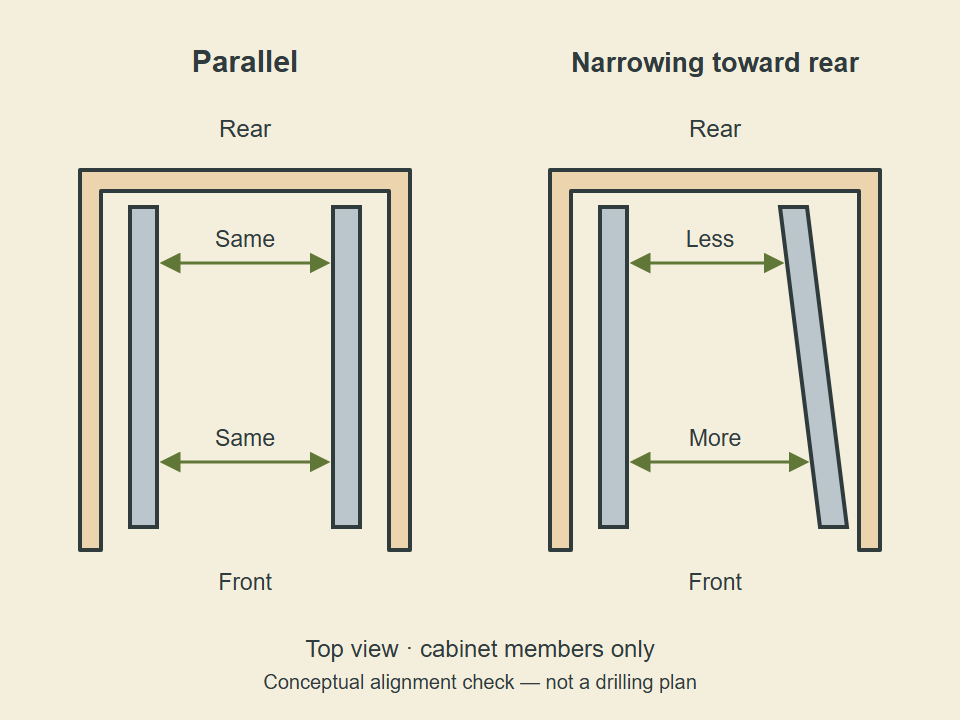
Check for shifted fixings and sound mounting surfaces before moving the rails. Follow the adjustment guide and the exact slide instructions. Make one supported adjustment at a time, secure the required fixings and recheck. Do not leave a rail loose to make the drawer move.
Separate box damage from hardware damage
- The box is cracked or a joint has separated
- Repair the box first, then check its shape, fit and movement again. New runners will not make an unsound box square or secure.
- Only a small guide, roller or bracket is broken
- A matched component may be enough if the main running hardware is serviceable. Identify its attachment and fit; a similar-looking part is not confirmation. If both the small part and main mechanism are damaged, assess the main mechanism too.
- A rail or main running mechanism is bent or broken
- Use the visual Identifier before choosing the replacement route. A pair of side slides, a single center mechanism and a manufacturer’s drawer system have different replacement requirements.
- Nothing damaged is visible
- Unload the drawer if you can. Check whether the runner still catches with the contents removed and, only where the matching instructions allow safe access, with the drawer detached. If the fault disappears unloaded, revisit fit, support and the documented load rather than treating that result as proof of failed slides.
Persistent catching with no contents still needs interpretation: debris, mounting and the running hardware remain separate possibilities. Avoid a blanket lubricant or sanding fix before identifying the construction and its care instructions.
When replacement becomes the next step
Once the damaged part and hardware type are established, use the replacement guide to check a matching component, the same type of running hardware, or the exact manufacturer’s system. Record useful closing and opening functions before changing parts.
If movement is smooth until the last part of closing, use the incomplete-closing checks. If the drawer simply stops at a repeatable opening distance, compare normal extension and lost travel before calling it a jam.