Fix · separated or damaged hardware
Drawer slide broken, separated or off track?
First determine whether the drawer has simply disengaged or a part has actually broken. Reinstalling intact hardware, replacing one compatible component and replacing a failed running mechanism are different jobs. A cracked drawer box needs structural repair before it goes back into service.
Check what is still intact
The Planner starts with engagement, then separates small-part damage, main-mechanism damage and a broken box. Use “help with access” if you cannot inspect the attachment safely.
The interactive Planner needs JavaScript. The guidance on this page remains available below.
Get access without turning a separation into damage
Empty and support the drawer. Look for the actual release arrangement before pulling farther: it may use a side lever, an underside locking device, another latch or a system-specific removal method. Resistance alone does not tell you which release is present.
Use the removal guide and visual helper to recognize the attachment. If no release is visible, do not assume the drawer must lift out or needs a harder pull. Identify the system or leave access unresolved until its instructions are available.
If nothing is broken, check the engagement points
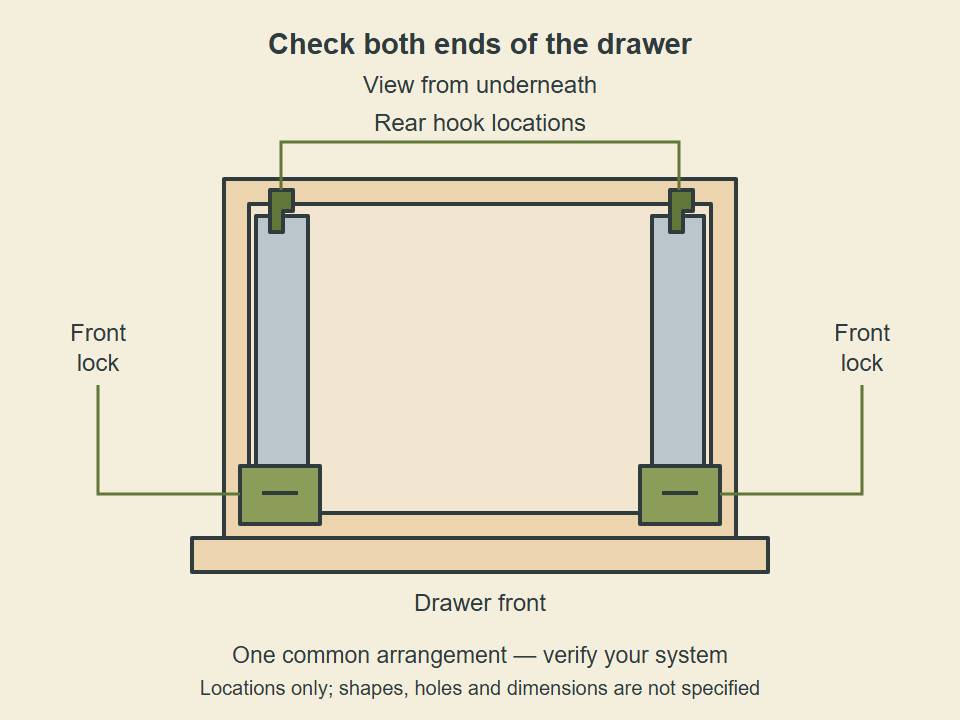
Use the matching installation or re-engagement procedure. Check every attachment point that the identified system requires; a drawer resting on runners is not necessarily locked to them. If a catch will not engage, inspect for misalignment, an obstruction or visible damage instead of forcing it.
The Planner’s “Reinstall / re-engage” result is a next action, not confirmation that the drawer is seated. Confirm engagement using the hardware’s own instructions, then check normal travel with the drawer empty.
If a part has broken, decide how much needs replacing
- A bracket, locking device, roller, guide or stop
- If the main runner is sound, investigate a matching component first. Compare identification marks, handedness where applicable, shape, attachment and the mating hardware. Keep compatibility unconfirmed until those details match. For legacy dresser guides, use the center-track guide replacement checks.
- A bent or cracked rail, or damaged main mechanism
- Identify the family before selecting replacement hardware. A paired-slide installation may need a matched set; a single track is not a pair, and a proprietary drawer system may require its manufacturer’s parts. Use the replacement guide to follow the applicable route.
- A cracked side, broken joint or damaged box
- Repair the drawer structure before relying on its attachment to the runners. Replacing a guide or slide does not restore a failed joint or a fixing torn out of the box.
If more than one fault is visible, address structural damage and secure support before reinstalling or testing the drawer. A tool result based on one reported fault does not certify the rest of the assembly.
If the cause is still unclear
Keep the next action as inspection of attachment, engagement and alignment. “Not sure” is not evidence that a rail, roller or guide needs replacing. Use the visual identifier for old drawer hardware and record any markings or broken pieces you can inspect without forcing access.
Before ordering, establish whether the part can be replaced separately and whether the proposed part belongs to the existing system. If a compatible small part is unavailable, reassess the replacement route for that construction rather than fitting an approximate substitute.