Compare · rails and wheels
Ball-bearing vs roller drawer slides
Start with the mechanism: nested metal rails or simple channels with visible wheels. Then compare the function and fit you need. “Ball-bearing” and “roller” are construction clues, not guarantees of capacity, extension or quality.
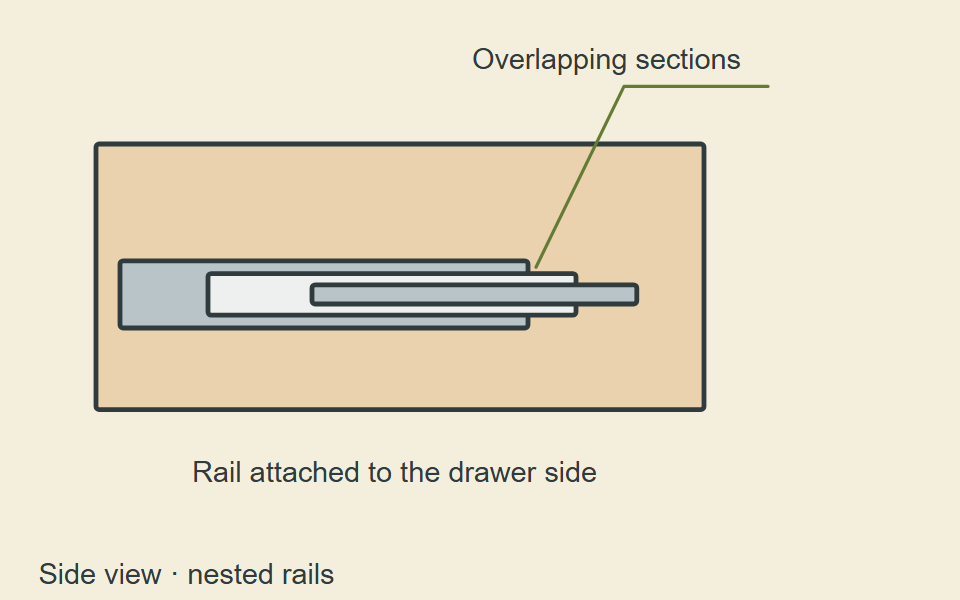
Nested ball-bearing rails
Metal sections slide within one another. This comparison covers the side-mounted family; bearings can also appear in other arrangements.
My drawer has ball-bearing side rails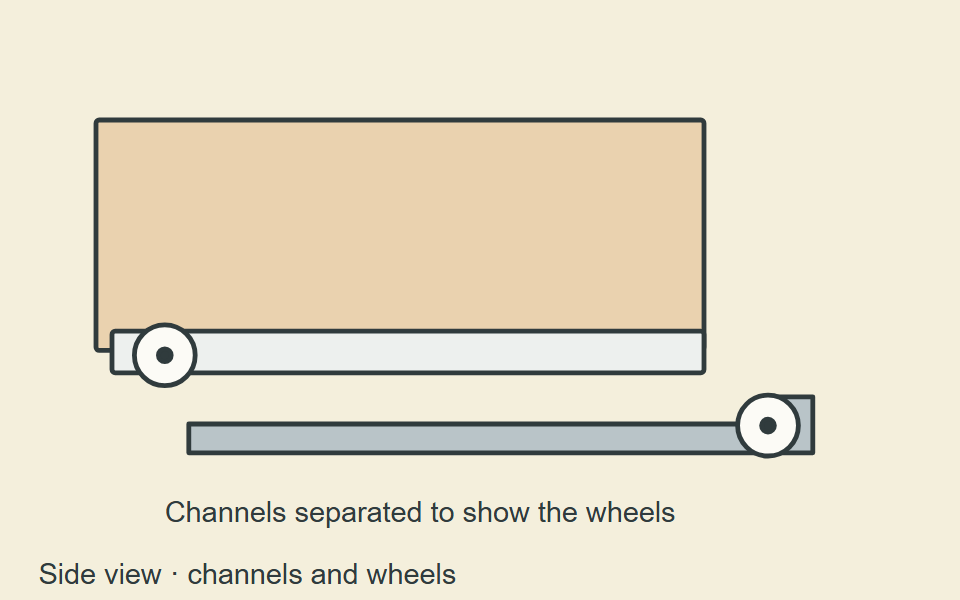
Euro / roller channels
Visible wheels run along shaped channels, often near the lower edges of a wood box. Paint color does not identify a compatible replacement.
My drawer has roller channelsSelect the hardware already fitted. The Planner asks your task next; selecting a type does not request a conversion.
The differences that affect your choice
- How far it opens
- Partial-extension roller products are common, and full-extension ball-bearing products are available. Check the exact model instead of treating either feature as guaranteed. A longstanding smooth partial stop may be normal.
- How it closes
- A roller profile may pull a drawer closed near the end of travel. That self-closing action is different from damping. Some ball-bearing models include soft-close, but others do not.
- Removal
- A roller model may lift out; a telescoping slide may use a disconnect lever. Follow the identified model’s method. Neither label tells you to pull through a stop.
- Space and support
- The channel profile, wheel position, rail thickness and fixing points can differ. Compare drawer width, usable side space and sound mounting surfaces with the candidate’s drawing.
- Performance
- A worn or misaligned example is a poor test of an entire slide family. Compare rated products under their stated installation conditions; do not infer a load rating from a metal rail or a plastic wheel.
Replace like for like, or change the arrangement?
If the existing roller arrangement suits the job: a compatible repair or replacement can avoid unnecessary changes to the drawer. Use the roller-slide replacement guide to distinguish a component issue from replacement of the complete set.
If you want a specific new function: state it first—more access, a different closing action or a documented capacity for the intended use. Check whether a suitable same-type option exists before choosing conversion.
If you choose side-mounted ball-bearing slides: verify usable side space and mounting support before following the side-slide installation guide. Equal nominal lengths do not make the two families interchangeable. The box or its supports may need alteration.