Choose · load and use
How to check drawer slide weight capacity
A weight rating belongs to a particular slide and installation. “Heavy duty” on a listing is not enough to show that a replacement suits your drawer.
Start with what the drawer needs to do
For an ordinary household drawer that works well, heavier slides are not automatically an improvement. If it sticks, sags or has loose fixings, investigate that problem instead of assuming the load rating is the cause.
For cookware, pantry storage or a very wide drawer, check the intended use against a documented option. The Planner starts with a simple use category; you do not need to weigh the contents to begin.
Check whether I need a higher-rated slideFor a current fault, start with the drawer problem.
Read the rating as a set of conditions
- Exact model and length
- Find the manufacturer’s sheet for the proposed item. Check its length and drawer-width limits, not just the largest capacity advertised for the range.
- One slide, a pair or a system?
- Use the manufacturer’s stated basis. Do not double a rating that already applies to a pair.
- Mounting position
- A side-mounted rail and the same rail laid flat are different load cases. Flat mounting needs both permission and an applicable rating for that exact model.
- Conditions of use
- Read the test/application notes and distinguish a moving-load rating from a static figure. Check how drawer weight and contents are accounted for. Do not convert a larger static figure into a working-load allowance.
- The furniture carrying it
- Inspect the drawer, mounting surfaces, screws and supports. A stronger slide does not repair a split box, loose bracket or damaged fixing point.
Side-mounted is different from laid flat
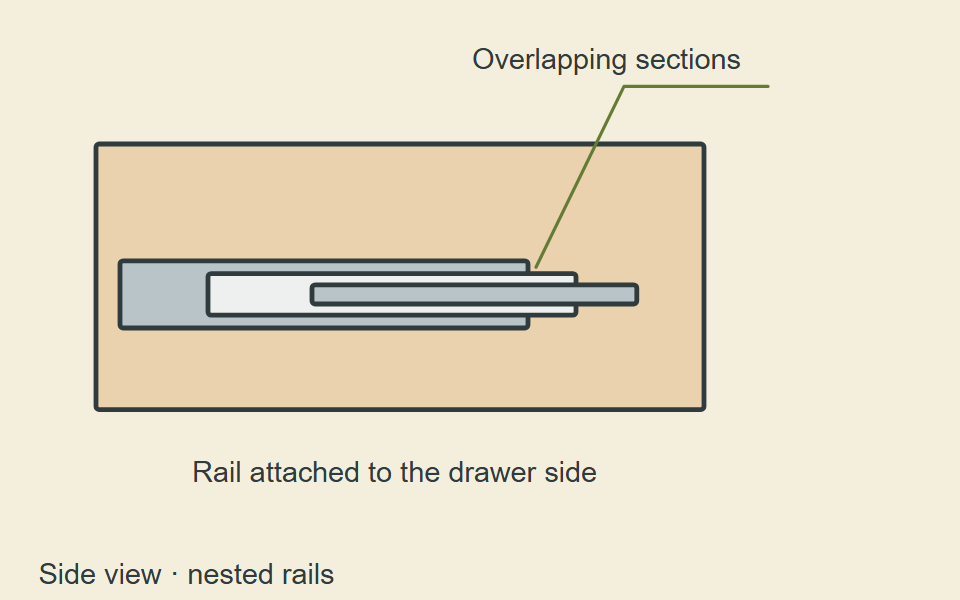
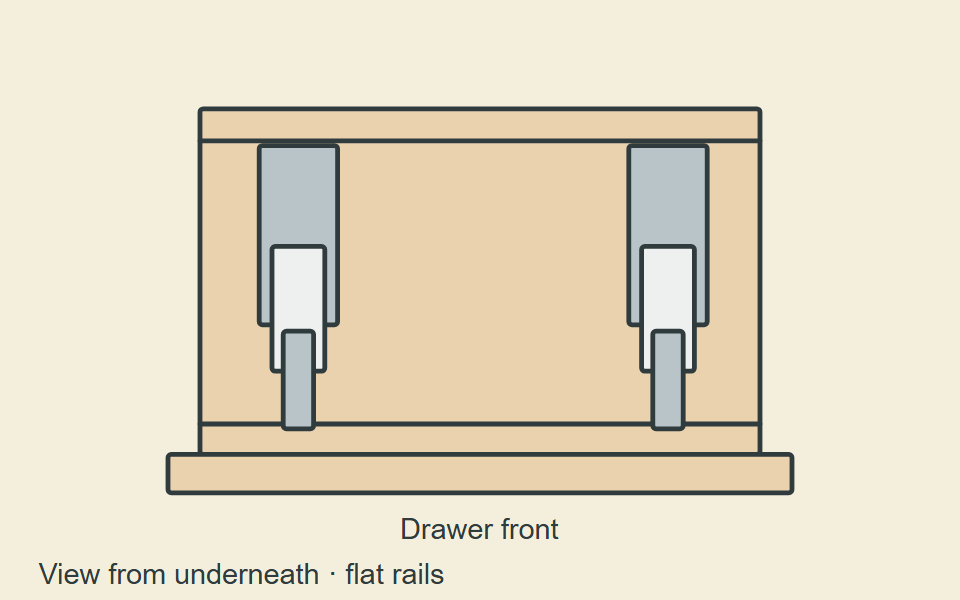
Do not use a generic percentage to calculate flat-mount capacity. Follow the selected model’s documentation. A concealed undermount system designed for use below the drawer is also different from a side rail turned on its back.
Choose the next practical route
- Normal use, no fault: keep the working arrangement unless there is another reason to change it.
- More demanding storage: first look for a documented, suitable higher-rated option in the same hardware family. Check fit and retain any closing or opening functions you need.
- Very wide or unusual use: check the manufacturer’s application limits and support requirements before treating a headline rating as sufficient.
- Wood runners or unidentified older hardware: there is no reliable capacity to infer from appearance. Identify the construction and its condition; do not assign it a modern slide’s rating.
Use the side-mount reference to recognize that arrangement, then record the measurements needed for a candidate. A higher rating still needs to fit the available space.