Type reference · one central metal slide
Center-mount drawer slides: one rail, not a replacement pair
A single metal slide beneath the middle of a drawer has different replacement needs from two side-mounted slides. First distinguish the slide assembly from an older center track with separate guide pieces.
I have a single center-mount metal slide
Confirm the construction below if you are unsure. This choice identifies the hardware; next, choose whether to fix, replace or improve the drawer.
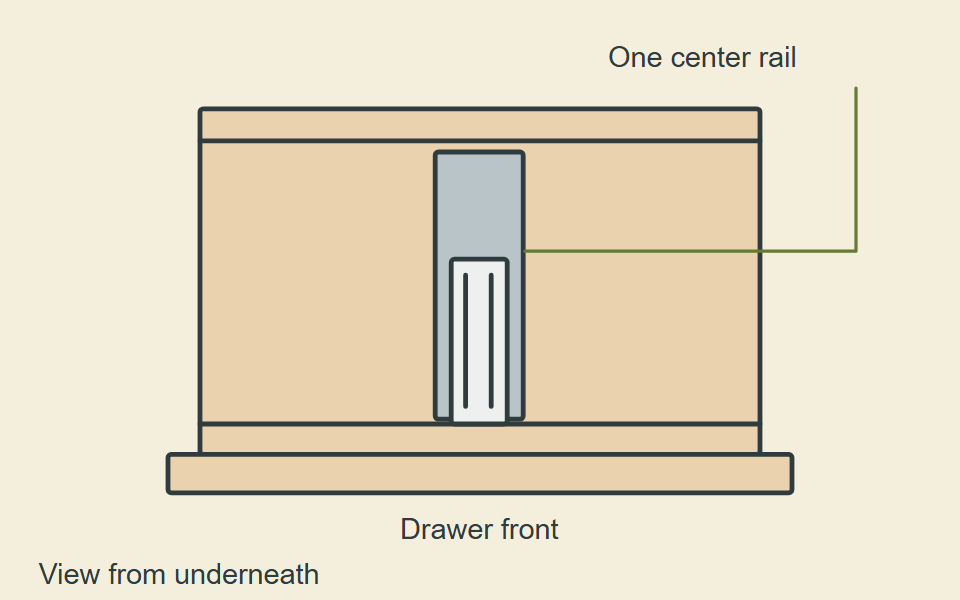
A center-mount slide assembly
Look for one metal slide mechanism below the drawer’s center. The moving pieces belong to a slide assembly; designs can use bearings or rollers. A telescoping example is shown here. Follow that model’s mounting and engagement instructions.
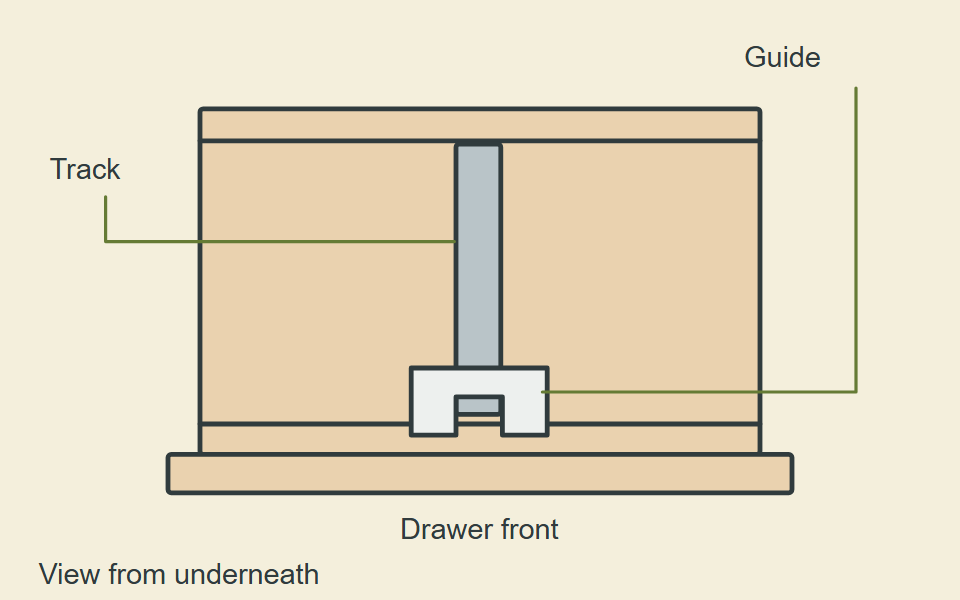
A track with separate guides
A simple track passes through a separate guide, with other supports or glides around the drawer. If a small guide or socket has broken, start with the wooden and center-track guide reference rather than assuming the whole metal slide must be replaced.
Position alone does not identify the mechanism
“Center mount” is also used in listings for wooden tracks and guide kits. “Undermount” can mean anything mounted below a drawer, including a single center slide. Look at the mechanism itself before relying on either label.
If there are two concealed runners near the sides, or two telescoping rails laid flat, compare the other drawer-slide types. Those are different arrangements from the single central slide covered here.
Where this family fits
Single center slides appear in furniture and light-duty cabinet applications. They can keep hardware off the visible drawer sides, but a central mounting position does not establish how much weight a particular assembly can carry or how far it should extend. The product specification and the drawer’s supporting construction control those limits.
For example, Knape & Vogt has documented both ball-bearing and roller-based center-under designs. That is a reason to identify your model, not to treat all center slides as interchangeable. Keep any other drawer supports in the comparison: replacing the center hardware alone does not prove that the drawer is properly supported.
If the drawer has dropped, separated or stopped moving
Inspect the accessible mounting points and the slide before buying anything. Note whether a fastener or support has come loose, the moving pieces have disengaged, or the main metal member is bent or broken. Also check the drawer box: a sound slide will not repair a split mounting surface.
Do not force a bent member back through its mating part. The broken, separated or off-track guide separates a possible re-engagement problem from component, main-rail and drawer-box damage.
What to match for replacement
- The complete arrangement
- Match a single center-slide assembly. “Replace the pair” advice for side slides does not apply. Keep brackets, supports and readable markings until you know which parts the replacement needs.
- Length and space
- Record the closed slide length and the available installation depth and underside space. Use the measurement guide; a model number is not automatically a length.
- Attachments
- Compare the front and rear mounting points, drawer attachment and engagement method. Equal length does not prove that a new assembly will use the old mounting positions.
- Travel and loading
- Check the exact candidate’s permitted application. Do not borrow the rating or extension of a paired side slide, or infer either from the rail’s width.
Once the family is confirmed, continue to replacing a center-mount drawer slide for the installation and replacement sequence.