Recognize your hardware
Drawer slide types: what does your drawer run on?
Start with where the hardware sits and what moves: nested metal rails, exposed wheels, hidden runners, or a wood track. The drawer’s closing action alone does not identify its slide type.
Compare the drawings below, or let the visual Identifier guide you. No brand name or measurements needed to start.
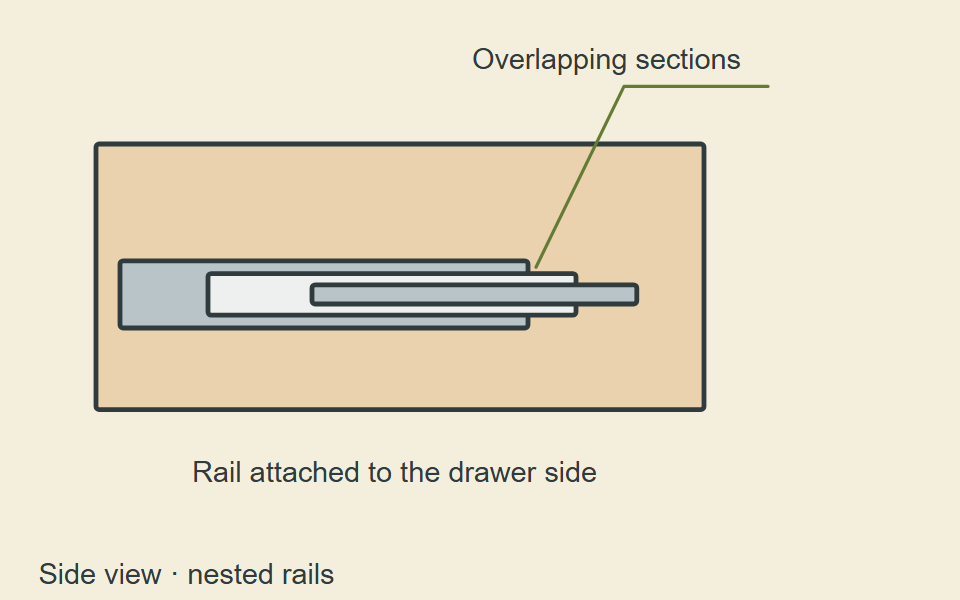
Side-mount ball-bearing
Telescoping metal sections run along both sides of a separate drawer box. The sections nest together when closed; small ball bearings run inside the assembly. A rail screwed to a wood side is different from a drawer whose side itself is formed metal.
Recognize side-mount slides and plan a replacement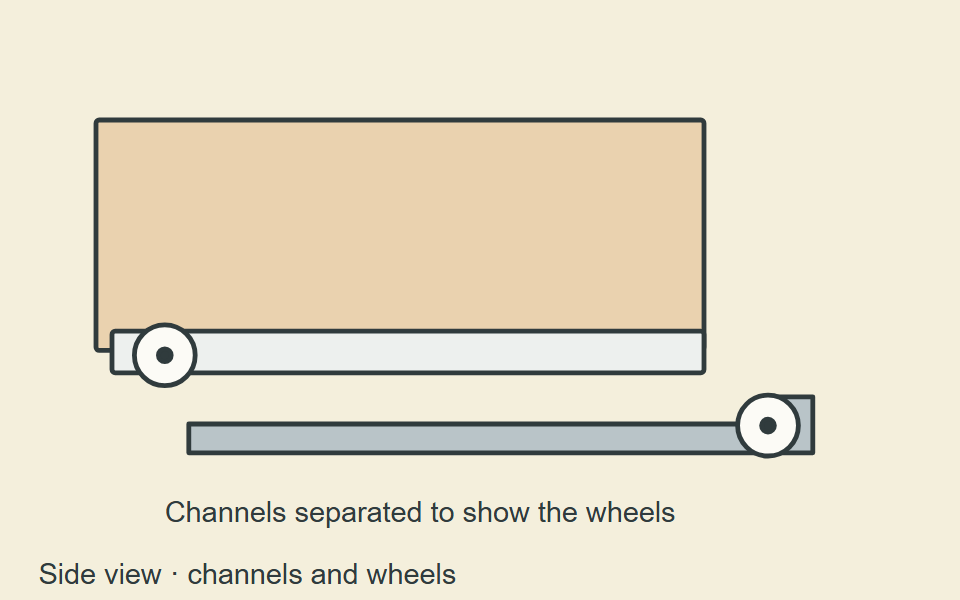
Euro / roller
Simple channels and visible plastic wheels sit near the lower side edges. Often called epoxy-coated runners, they are a different family from telescoping ball-bearing slides. Sellers sometimes call these “bottom mount”; the wheel-and-channel construction is the clearer clue.
See the roller-slide reference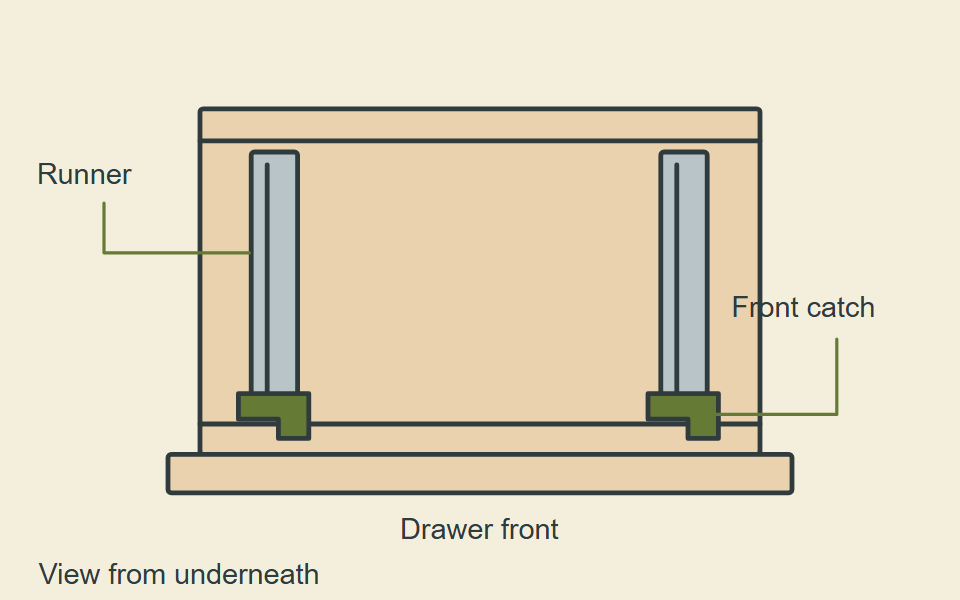
Concealed undermount
The runner pair is tucked beneath a separate drawer box. Look underneath near the front for locking devices or catches, then check the runners for markings. Some systems use other attachment arrangements, so missing clips do not settle the identification.
Check concealed runners and their fit requirements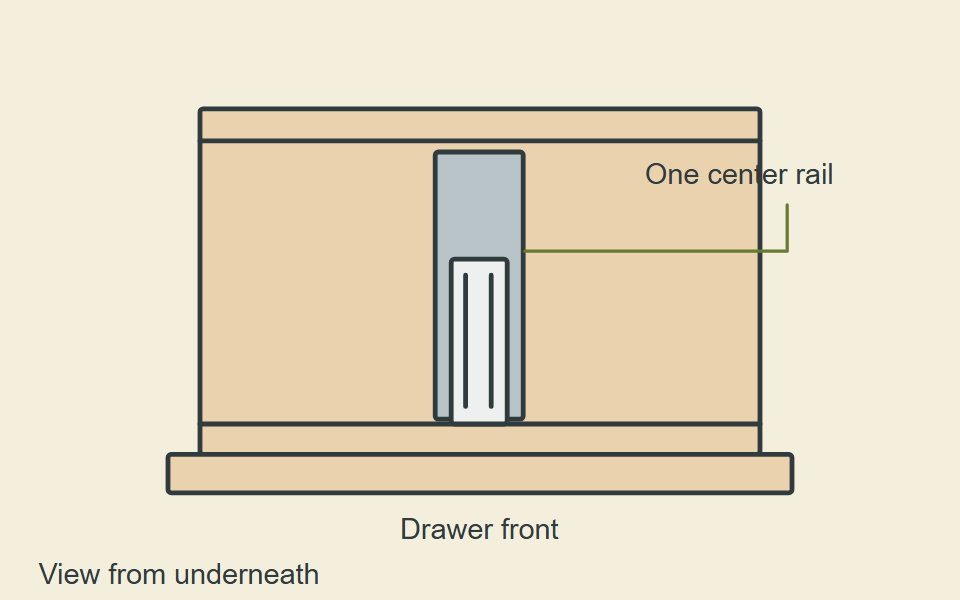
Single center-mount slide
One metal slide assembly supports or guides the drawer along its centerline. Check the whole assembly, not just the position: a separate track running through a guide belongs to the furniture center-track route below. A single-rail system is not a pair of side slides.
See the center-mount reference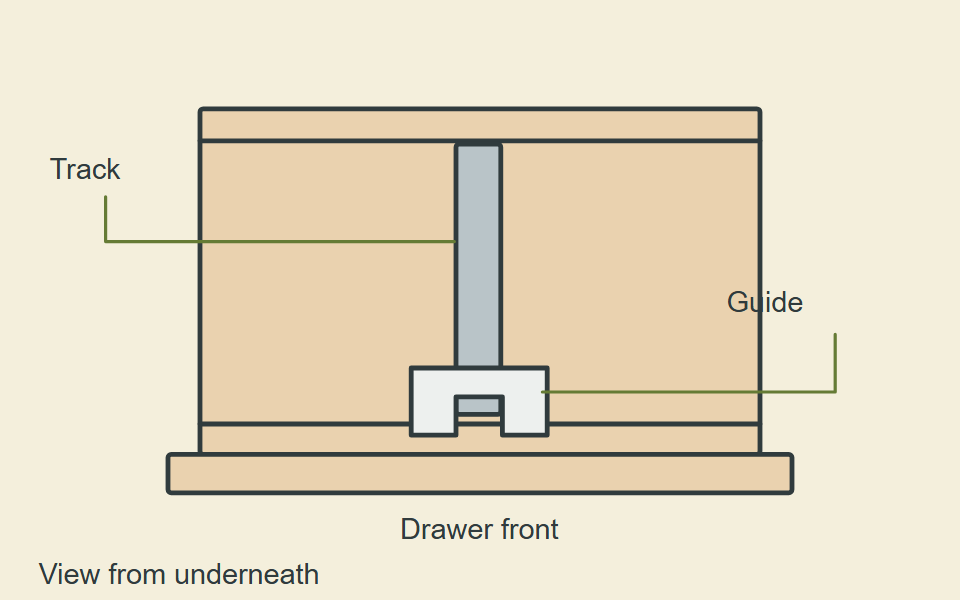
Furniture center-track and guides
A track works with separate guide, socket or glide pieces. This is common hardware to investigate on an older dresser. Identify which piece failed before replacing the whole arrangement: a guide, a rear support and the track are different parts.
Distinguish center-track hardware from wood runners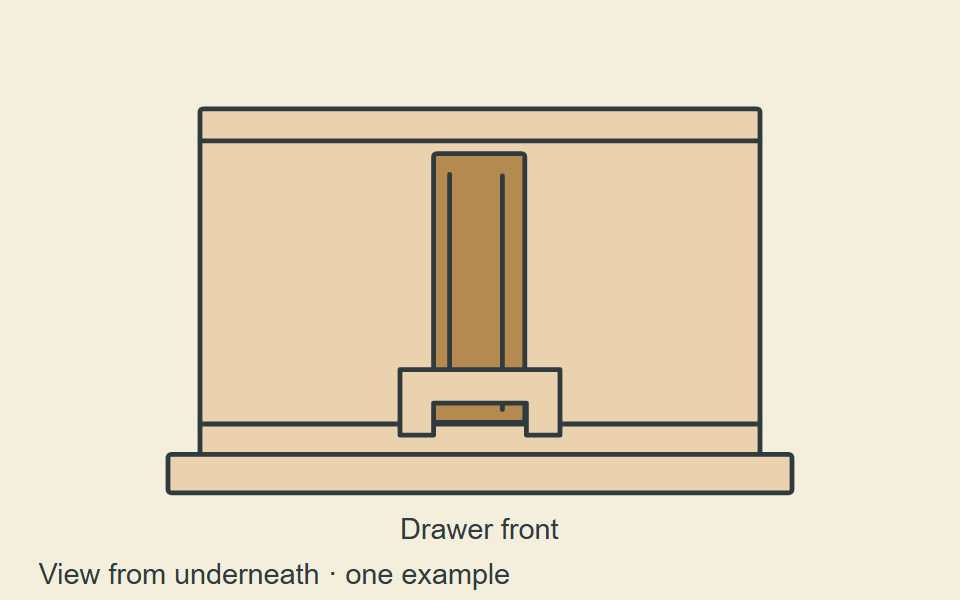
Wood runner
Wood surfaces slide against one another, at the center or along the sides. There may be a wood guide, a groove or a simple supporting rail. Begin with the condition and alignment of those parts; adding metal slides is a separate conversion decision.
Explore wood-runner repair priorities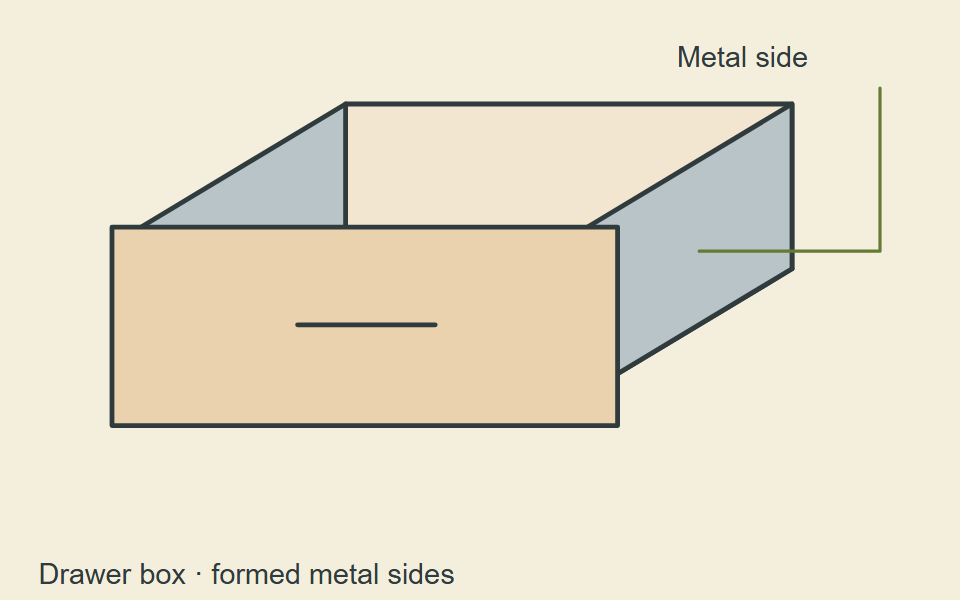
Integrated / proprietary drawer system
The formed metal sides are part of the drawer box rather than rails attached to wood. Match the system before choosing a runner, front connector or closing part. A metal-sided box does not prove that an ordinary side-slide replacement will fit.
Find markings and identify the systemNo clear match?
Other or older hardware
Do not force an unfamiliar mechanism into the nearest picture. Record where it mounts, any readable markings and whether the failed item is a small part or the main rail.
The Identifier can keep the type unresolved and still lead to a useful repair or replacement direction. The drawings show recognizable arrangements, not every version ever made.
Identify by what I can seeThree labels that can mislead you
- “Bottom mount”
- Could describe a roller channel at the lower edge, a single central rail, or a concealed runner pair. Look at the construction before ordering.
- “Soft-close”
- Describes a closing function. It does not tell you which mounting arrangement, dimensions or replacement parts your drawer needs.
- “Full extension”
- Describes travel. The amount of travel and the slide family are separate facts.
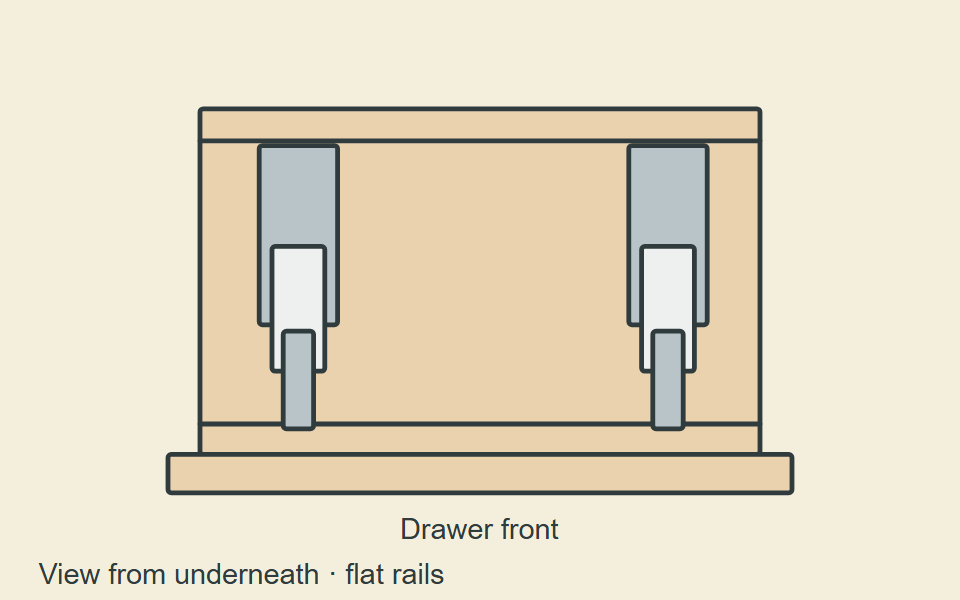
Hidden does not always mean undermount
A telescoping side-slide design may have been laid flat beneath a drawer. That position does not turn it into a concealed-undermount system. Check whether the exact slide permits flat mounting and which rating applies in that position.
If the underside does not match a concealed runner with its intended drawer attachments, use the Identifier rather than selecting undermount from location alone.