Upgrade · reach the back of the drawer
How to upgrade to full-extension drawer slides
Look for a documented full-extension option within your current slide type first. Match its actual travel and fitting requirements to the drawer, then check the functions you want to keep. Changing the mounting system is a further option when a suitable same-type replacement does not meet the task.
Find the route for your current hardware
The Planner identifies the drawer’s construction when needed, then separates a verified same-type option from one you have not checked. It keeps manufacturer systems and wooden runners on their own routes.
The interactive Planner needs JavaScript. The guidance on this page remains available below.
More access, or lost travel?
If the drawer used to open farther, now catches, or stopped short after installation, check the current travel before buying an upgrade. A blockage, misalignment or incomplete engagement needs a different response from a drawer working at its designed limit.
Troubleshoot the current travel
If it works normally and you want to reach more of the contents, continue with the upgrade. Do not remove stops or force the drawer beyond its designed travel.
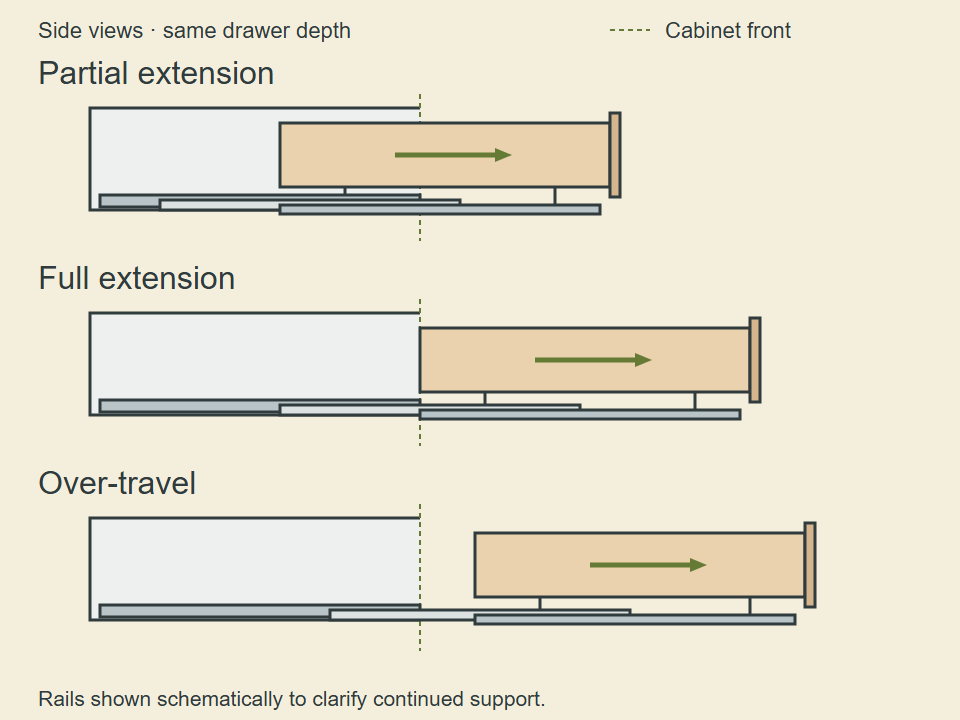
See extension types for the distinction between partial extension, full extension and over-travel. A longer closed slide is not automatically a better fit or a solution to limited access.
What changes for each kind of drawer?
- Separate metal slides or roller channels
- Check a same-type option against the current mounting arrangement. If suitable options have been checked and none fit, investigate a different slide type with its own geometry and support requirements. “Not checked” should remain a check, not become a conversion decision.
- Concealed runners or a metal-sided system
- Use the exact system’s documented options, matching the box, locks and attachments. Similar appearance does not establish compatibility. If the manufacturer system has no suitable option, a broader conversion needs its own feasibility assessment.
- Wood sliding on wood
- A modern full-extension slide is a change of running system, not a like-for-like wooden-runner replacement. Check mounting surfaces and space, and plan any box or cabinet modification before removing the existing support.
- Older unidentified hardware
- A documented compatible add-on may allow the current architecture to remain. Otherwise, identify the construction while investigating replacement or conversion. Do not treat a similar-looking part as a verified match.
Compare a candidate before ordering
- Actual length and travel. Record the current closed slide length, drawer depth and usable cabinet depth using the measurement guide. Check the candidate’s travel separately from nominal length, including whether the drawer will clear an overhang.
- Space and mounting. Use the clearance guide to record the actual arrangement, then apply the selected model’s requirements. Confirm supports, fixing surfaces and mounting orientation. A side-mounted load rating does not approve using that slide flat underneath.
- Functions and rated use. Check the complete setup’s opening/closing behavior and documented load conditions. Full extension does not automatically include soft-close, preserve push-to-open or increase capacity. Choose a preserving option or explicitly accept a documented change.
- The complete installation. Use the matched components specified for the selected hardware. Do not mix old and new rail members on appearance alone, assume old screw holes are correct, or omit required brackets.
A product name and these checks form a useful buying specification. The Planner records your findings; it does not independently certify a particular product’s fit.
Choose a practical amount of work
When a compatible same-type option meets the goal, it can avoid unnecessary reconstruction. If you want concealed runners, use the side-mount-to-undermount conversion checks before committing to that change. Keeping the current serviceable setup is also reasonable if the required work outweighs the access gained.
After fitting according to the selected instructions, check an empty opening/closing cycle, engagement and intended travel before returning normal contents within the rating. For a different drawer problem or goal, start the Planner.